
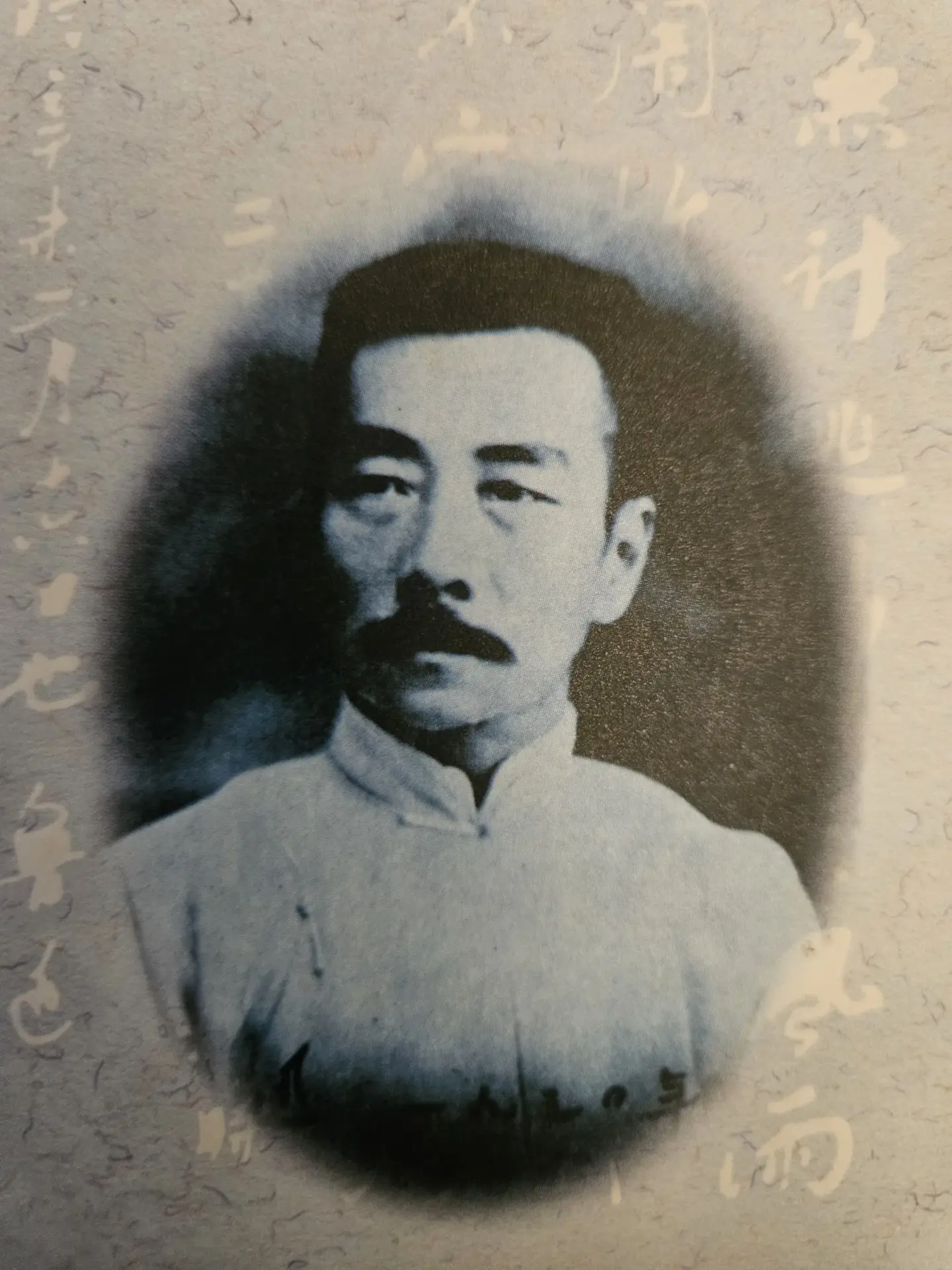
Lu Xun — A Chinese Master
I discovered Lu Xun when I was a 22-year-old English teacher in Heilongjiang, China’s northernmost province. I bought a book titled, Lu Xun Selected Poems, at a local bookstore, which had a black and white picture of him on its cover with English translations, and I read it from beginning to end that same night.
I remember asking my adult students and others about him and his legacy, but no one really wanted to talk about him in great detail. After learning more about him and his legacy, I now understand why.
Lu Xun was a leading figure in Chinese literature. He was born in 1881 into a family of declining financial means, which resulted in him attending government-funded schools. He moved to Japan to pursue medical studies but dropped out and returned to China where he worked at the Ministry of Education in Beijing where he wrote and self-published numerous books.
Lu Xun’s goal was to reform the Chinese language. His poetry was often critical of society and culture. He wrote in clear and honest language and helped pioneer the New Culture Movement. He also became increasingly involved in politics and engaged in left-wing politics, serving as the head of the League of Left-Wing Writers in Shanghai. After a prolonged illness, he passed away in 1936 at the age of 55 and was later canonized by the People’s Republic of China.
Shortly after his death the Chinese Communist Party and Mao Zedong began to use his legacy to advance their political goals. He was referred to as “a willing ox” and was depicted by communist party leaders as “drawing the blueprint of the communist future.” Mao Zedong further defined him as the “chief commander of China’s Cultural Revolution,” but later, as the communist party sought more control over intellectual life in China, some of his works were removed from school textbooks with his satirical writing style being ridiculed, discouraged, and ultimately destroyed. During the Cultural Revolution, communist leaders hailed Lu Xun and ironically suppressed the artistry, which he cultivated and represented.
Despite political hindrance, Lu Xun’s legacy is unmistakeable. His poetry and literary works have solidified him as a critical and influential voice of Chinese literature. His work now appears in school curriculums, influencing a new generation of people and will live on its own merits.
Dear reader, if you value poetry, I urge you to find Lu Xun’s poetry, his blend of critical thinking and beauty will leave you in awe. He was a true Chinese master.
THE GOD OF LOVE
A little boy spreads his wings in the air,
Fits an arrow to his bow, and draws it back.
Somehow or other it hits you in the chest.
“Thank you, young master, for your indiscriminate attentions.
But tell me, please, whom I should love.”
The boy is flustered, shakes his head, and sighs
“You have a heart. How can you ask such a thing?
How can I know whom you should love?
Anyhow, I’ve shot my arrow. If you are going to love someone, love them for all you’re worth;
If there’s no one you love, then die for all you’re worth.”
A RIPOSTE TO A FRIEND
Does a true hero have to be heartless?
Surely a real man may love his young son.
Even the roaring, wind-raising tiger
Turns back to look at his own tiny cubs.
A REPORT
Under great lanterns at the banquets of the mighty
Superbly-dressed beauties present jade goblets,
Then, remembering loved ones under the ashes,
Look down at their stockings to cover their tears.
Sign up for the monthly newsletter and never miss a word.
